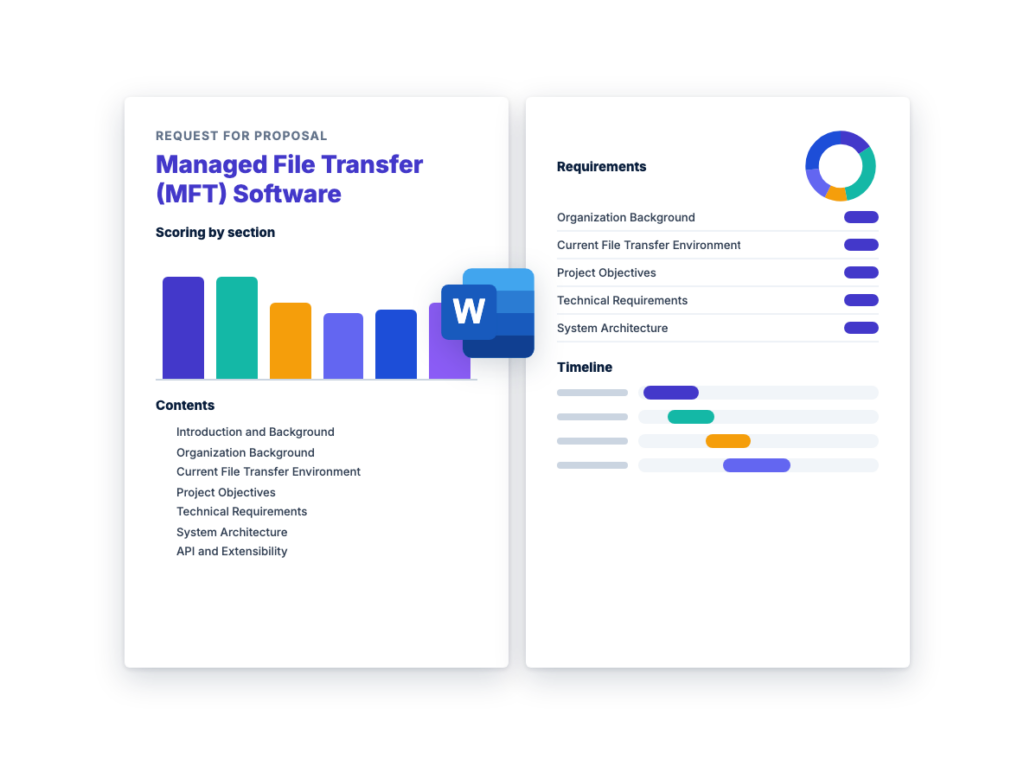
Request for Proposal: Managed File Transfer (MFT) Software Solution
Table of Contents
- Introduction and Background
- Technical Requirements
- Core Functional Requirements
- AI and Machine Learning Features
- Vendor Evaluation Criteria
- Compliance and Certifications
- Reporting and Analytics
- Future-Proofing Requirements
- Submission Guidelines and Timeline
1. Introduction and Background
[Company Name] is seeking proposals for a comprehensive managed file transfer (MFT) software solution to enhance our data exchange capabilities. MFT software is an advanced solution for secure, compliant, and efficient data exchange across networks. This RFP outlines our requirements for a robust system that will protect and manage our file transfers while ensuring compliance and operational efficiency.
1.1 Organization Background
- Brief description of your organization
- Industry-specific requirements
- Scale of file transfer operations
1.2 Current File Transfer Environment
- Existing file transfer solutions and protocols in use
- Current challenges or limitations
- Integration points with existing systems
1.3 Project Objectives
- Enhance security and compliance in file transfers
- Improve operational efficiency
- Streamline file transfer processes
- Ensure scalability for future growth
2. Technical Requirements
2.1 System Architecture
- Scalable architecture supporting high-volume transfers
- Support for distributed and load-balanced environments
- High availability design
- Fault tolerance capabilities
- Performance optimization features
- Redundancy options
2.2 API and Extensibility
- Comprehensive API for integration and customization
- Support for custom scripting and plugins
- API documentation
- Development tools
- Integration capabilities
- Extension frameworks
2.3 Performance Metrics
- Detailed performance monitoring and reporting
- SLA monitoring and management
- Performance benchmarking tools
- Capacity planning capabilities
- Resource utilization tracking
- Historical performance analysis
2.4 Disaster Recovery
- Built-in disaster recovery features
- Automated failover mechanisms
- Business continuity capabilities
- Data backup and restoration
- Recovery time objectives
- Recovery point objectives
2.5 Mobile Support
- Secure file transfer on mobile devices
- Mobile-friendly management interface
- Cross-platform mobile support
- Mobile security features
- Remote access capabilities
- Mobile app functionality
2.6 Infrastructure Requirements
- Server specifications
- Network requirements
- Storage requirements
- Backup infrastructure
- Security infrastructure
- Monitoring infrastructure
2.7 Scalability Requirements
- Growth accommodation capabilities
- Performance scaling specifications
- Resource management features
- Load balancing requirements
- Clustering capabilities
- Geographic distribution support
3. Core Functional Requirements
3.1 Multi-Protocol Support
Tip: A robust multi-protocol support system is fundamental for any MFT solution. Focus on not just current protocol needs but also future extensibility. Consider your organization’s specific protocol requirements and ensure the solution can handle both legacy and modern transfer methods while maintaining security across all protocols.
| Requirement |
Sub-Requirement |
Y/N |
Notes |
| Protocol Support |
Support for FTPS |
|
|
|
Support for SFTP |
|
|
|
Support for AS2 |
|
|
|
Support for SCP |
|
|
|
Support for AFTP |
|
|
|
Support for OFTP |
|
|
|
Support for HTTP/S |
|
|
| Protocol Management |
Ability to add new protocols |
|
|
|
Protocol-specific security configurations |
|
|
|
Protocol performance monitoring |
|
|
| Future Proofing |
Protocol version updates |
|
|
|
New protocol integration capability |
|
|
|
Legacy protocol support |
|
|
3.2 Security and Encryption
Tip: Security requirements should address both data protection and compliance needs. Consider your industry-specific regulations and ensure the solution provides comprehensive security features that can adapt to evolving threats while maintaining operational efficiency.
| Requirement |
Sub-Requirement |
Y/N |
Notes |
| Data Encryption |
End-to-end encryption for data at rest |
|
|
|
End-to-end encryption for data in motion |
|
|
|
Encryption key management |
|
|
| Authentication |
Advanced authentication mechanisms |
|
|
|
Multi-factor authentication support |
|
|
|
Directory service integration |
|
|
| Authorization |
Role-based access control |
|
|
|
Granular permission settings |
|
|
|
User privilege management |
|
|
| Compliance |
PCI DSS compliance features |
|
|
|
HIPAA compliance features |
|
|
|
GDPR compliance features |
|
|
|
CCPA compliance features |
|
|
| Session Management |
Session breaks capability |
|
|
|
Protocol inspection features |
|
|
|
Session monitoring and logging |
|
|
3.3 Automation and Workflow Management
Tip: Effective automation should reduce manual intervention while maintaining process transparency and control. Focus on solutions that provide flexible workflow design capabilities and robust error handling, ensuring business processes can be reliably automated while remaining adaptable to changing requirements.
| Requirement |
Sub-Requirement |
Y/N |
Notes |
| Process Automation |
Automated file transfer processes |
|
|
|
Event-triggered transfers |
|
|
|
Conditional routing |
|
|
|
Business process integration |
|
|
| Scheduling |
Recurring transfer scheduling |
|
|
|
Time zone management |
|
|
|
Calendar-based scheduling |
|
|
|
Schedule override capabilities |
|
|
| Smart Routing |
Content-based routing |
|
|
|
File transformation triggers |
|
|
|
Dynamic path selection |
|
|
|
Rule-based routing |
|
|
| Self-Healing |
Automated error recovery |
|
|
|
System health monitoring |
|
|
|
Automatic failover |
|
|
|
Recovery verification |
|
|
3.4 Monitoring and Alerting
Tip: Comprehensive monitoring and alerting capabilities are essential for maintaining operational visibility and ensuring timely responses to issues. Focus on solutions that provide detailed insights into all aspects of file transfer operations while supporting customizable alerting frameworks.
| Requirement |
Sub-Requirement |
Y/N |
Notes |
| Throughput Monitoring |
Real-time transfer speed monitoring |
|
|
|
Bandwidth utilization tracking |
|
|
|
Network performance metrics |
|
|
|
Historical throughput analysis |
|
|
| User Activity Insights |
Detailed user session tracking |
|
|
|
User behavior analytics |
|
|
|
Access pattern analysis |
|
|
|
Resource usage per user |
|
|
| Alert Management |
Security violation alerts |
|
|
|
Performance threshold alerts |
|
|
|
Custom alert configuration |
|
|
|
Alert prioritization |
|
|
| Reporting |
Real-time dashboard views |
|
|
|
Customizable report templates |
|
|
|
Trend analysis reports |
|
|
|
Compliance reporting |
|
|
3.5 Integration Capabilities
Tip: Robust integration capabilities ensure seamless operation with your existing infrastructure while supporting future expansion. Consider both current integration needs and potential future requirements when evaluating integration features.
| Requirement |
Sub-Requirement |
Y/N |
Notes |
| Pre-built Integrations |
SAP ERP integration |
|
|
|
Oracle ERP integration |
|
|
|
Salesforce CRM integration |
|
|
|
Microsoft Dynamics integration |
|
|
|
ServiceNow integration |
|
|
|
Workday integration |
|
|
| Platform Compatibility |
Windows Server support |
|
|
|
Linux distribution support |
|
|
|
Unix system support |
|
|
|
macOS support |
|
|
|
Mobile iOS support |
|
|
|
Mobile Android support |
|
|
| Cloud Integration |
AWS integration |
|
|
|
Azure integration |
|
|
|
Google Cloud integration |
|
|
|
Oracle Cloud integration |
|
|
| Security Integration |
SIEM system integration |
|
|
|
Identity management integration |
|
|
|
DLP solution integration |
|
|
|
EDR system integration |
|
|
3.6 File Management
Tip: Comprehensive file management capabilities are crucial for maintaining control over data throughout its lifecycle. Ensure the solution provides robust versioning, efficient compression, and clear audit trails while supporting your organization’s data retention and compliance requirements.
| Requirement |
Sub-Requirement |
Y/N |
Notes |
| Version Control |
File versioning system |
|
|
|
Version history tracking |
|
|
|
Rollback capabilities |
|
|
|
Version comparison |
|
|
| Compression |
File compression algorithms |
|
|
|
Format-specific compression |
|
|
|
Compression ratio controls |
|
|
|
Decompression capabilities |
|
|
| File Tracking |
Real-time status monitoring |
|
|
|
Transfer history logging |
|
|
|
File location tracking |
|
|
|
Chain of custody |
|
|
| Retention Management |
Retention policy enforcement |
|
|
|
Automated archiving |
|
|
|
Secure deletion capabilities |
|
|
|
Compliance tracking |
|
|
3.7 Error Handling and Recovery
Tip: Robust error handling is essential for maintaining reliable file transfers. Look for solutions that provide comprehensive error detection, clear error reporting, and automated recovery capabilities to minimize disruptions to business operations.
| Requirement |
Sub-Requirement |
Y/N |
Notes |
| Automatic Retry |
Configurable retry attempts |
|
|
|
Retry interval management |
|
|
|
Failure notification |
|
|
|
Custom retry logic |
|
|
| Transfer Resume |
Checkpoint restart capability |
|
|
|
Partial transfer recovery |
|
|
|
Integrity verification |
|
|
|
Recovery point management |
|
|
| Error Notification |
Alert system integration |
|
|
|
Error categorization |
|
|
|
Notification routing |
|
|
|
Escalation procedures |
|
|
| Recovery Management |
Recovery point objectives |
|
|
|
Recovery time objectives |
|
|
|
Recovery automation |
|
|
|
Recovery validation |
|
|
3.8 Deployment Options
Tip: Flexible deployment options ensure the solution can adapt to your current infrastructure while supporting future growth. Consider both immediate needs and long-term scalability when evaluating deployment models.
| Requirement |
Sub-Requirement |
Y/N |
Notes |
| On-premises Deployment |
Local installation support |
|
|
|
Infrastructure requirements |
|
|
|
Performance optimization |
|
|
|
Security controls |
|
|
| Cloud Deployment |
Cloud platform support |
|
|
|
Multi-tenant capabilities |
|
|
|
Cloud security features |
|
|
|
Service level agreements |
|
|
| Hybrid Deployment |
Hybrid architecture support |
|
|
|
Integration capabilities |
|
|
|
Cross-environment management |
|
|
|
Data synchronization |
|
|
| Model Flexibility |
Deployment model switching |
|
|
|
Migration tools |
|
|
|
Environment synchronization |
|
|
|
Configuration management |
|
|
4. AI and Machine Learning Features
4.1 Intelligent Optimization
Tip: AI-driven optimization should focus on improving transfer efficiency while maintaining security. Look for solutions that can demonstrate measurable performance improvements and adapt to your organization’s specific transfer patterns.
| Requirement |
Sub-Requirement |
Y/N |
Notes |
| Transfer Optimization |
AI-driven file transfer speed optimization |
|
|
|
Network utilization optimization |
|
|
|
Dynamic resource allocation |
|
|
|
Load balancing optimization |
|
|
| Compression |
ML-based file compression |
|
|
|
File type-specific optimization |
|
|
|
Adaptive compression ratios |
|
|
|
Format-aware compression |
|
|
| Performance Learning |
Historical pattern analysis |
|
|
|
Predictive performance optimization |
|
|
|
Resource usage optimization |
|
|
|
Machine learning model updates |
|
|
4.2 Advanced Security
Tip: AI security features should complement traditional security measures while providing proactive threat detection and response. Ensure the solution can integrate with your existing security infrastructure and provide actionable intelligence.
| Requirement |
Sub-Requirement |
Y/N |
Notes |
| Threat Detection |
AI-powered anomaly detection |
|
|
|
Real-time threat prevention |
|
|
|
Behavioral analysis |
|
|
|
Pattern recognition |
|
|
| Predictive Security |
Security risk prediction |
|
|
|
Vulnerability assessment |
|
|
|
Threat pattern recognition |
|
|
|
Risk scoring |
|
|
| Security Response |
Automated threat response |
|
|
|
Incident prioritization |
|
|
|
Security event correlation |
|
|
|
Response automation |
|
|
4.3 Automated Workflow Management
Tip: AI workflow automation should enhance operational efficiency while maintaining control and visibility. Focus on solutions that can learn from your organization’s transfer patterns and optimize workflows automatically.
| Requirement |
Sub-Requirement |
Y/N |
Notes |
| Workflow Optimization |
Reinforcement learning for workflows |
|
|
|
Pattern-based optimization |
|
|
|
Adaptive workflow adjustment |
|
|
|
Process improvement suggestions |
|
|
| SLA Management |
AI-assisted SLA monitoring |
|
|
|
Predictive SLA breach prevention |
|
|
|
Performance tracking |
|
|
|
Automated remediation |
|
|
| Transfer Prioritization |
Intelligent priority assignment |
|
|
|
Resource allocation optimization |
|
|
|
Queue management |
|
|
|
Dynamic scheduling |
|
|
4.4 Smart Analytics
Tip: Smart analytics provide insights that can drive operational improvements and strategic decisions. Focus on solutions that offer both real-time monitoring capabilities and predictive analytics to optimize transfer operations.
| Requirement |
Sub-Requirement |
Y/N |
Notes |
| Predictive Analytics |
Transfer time prediction |
|
|
|
Resource usage forecasting |
|
|
|
Capacity planning |
|
|
|
Trend analysis |
|
|
| System Impact Analysis |
Performance impact assessment |
|
|
|
Resource utilization analysis |
|
|
|
Bottleneck identification |
|
|
|
Root cause analysis |
|
|
| Business Intelligence |
Usage pattern analysis |
|
|
|
Cost optimization suggestions |
|
|
|
Performance benchmarking |
|
|
|
ROI analysis |
|
|
4.5 Natural Language Processing
Tip: NLP capabilities can enhance user interaction and automated processing of file metadata. Consider how these features can improve searchability, classification, and overall user experience while maintaining security.
| Requirement |
Sub-Requirement |
Y/N |
Notes |
| Metadata Analysis |
Automated content classification |
|
|
|
Metadata extraction |
|
|
|
Tag generation |
|
|
|
Content categorization |
|
|
| File Prioritization |
Content-based prioritization |
|
|
|
Context analysis |
|
|
|
Priority assignment rules |
|
|
|
Urgency detection |
|
|
| Documentation Support |
AI-powered documentation |
|
|
|
Context-aware help |
|
|
|
Natural language search |
|
|
|
Interactive assistance |
|
|
4.6 Intelligent Configuration
Tip: Intelligent configuration features should simplify system management while maintaining security and reliability. Look for solutions that can automatically optimize settings based on usage patterns.
| Requirement |
Sub-Requirement |
Y/N |
Notes |
| Configuration Management |
AI-driven configuration |
|
|
|
Setting optimization |
|
|
|
Configuration validation |
|
|
|
Best practice enforcement |
|
|
| Drift Prevention |
Configuration monitoring |
|
|
|
Automated drift detection |
|
|
|
Remediation automation |
|
|
|
Policy compliance checking |
|
|
| System Optimization |
Performance tuning |
|
|
|
Resource optimization |
|
|
|
Load balancing |
|
|
|
Capacity optimization |
|
|
5. Vendor Evaluation Criteria
5.1 Company Profile
- Financial stability and market presence
- Years of experience in MFT solutions
- Customer base size and industry diversity
- Research and development investment
- Geographic presence and support capabilities
- Company growth trajectory
- Industry recognition and awards
5.2 Support and Maintenance
- 24/7 technical support availability
- Support channels (phone, email, chat)
- Response time guarantees
- Escalation procedures
- Regular software updates and patch management
- Proactive maintenance services
- Knowledge base and documentation quality
- Customer support portal features
5.3 Training and Documentation
- Comprehensive training programs for administrators
- End-user training options
- Training delivery methods (online, onsite, self-paced)
- Documentation quality and completeness
- Knowledge base accessibility
- Video tutorials and guides
- Regular documentation updates
- User community and forums
5.4 Implementation Services
- Implementation methodology
- Project management approach
- Resource availability
- Implementation timeline
- Migration assistance
- Integration services
- Customization capabilities
- Testing and validation procedures
- Post-implementation support
5.5 Pricing and Licensing
- Pricing model transparency
- License type options (perpetual, subscription)
- Pricing scalability
- Additional costs (maintenance, support, training)
- Volume discounts
- Upgrade pricing
- Custom pricing options
- Payment terms
6. Compliance and Certifications
6.1 Industry Standards
- ISO 27001 certification
- SOC 2 compliance
- Other relevant security certifications
- Quality management certifications
- Industry-specific standards compliance
- Regular audit and certification maintenance
- Compliance monitoring and reporting
6.2 Data Protection Regulations
- GDPR compliance capabilities
- CCPA compliance features
- HIPAA compliance tools
- PCI DSS compliance support
- Data privacy protection measures
- Cross-border data transfer compliance
- Data retention compliance
6.3 Industry-Specific Compliance
- Healthcare industry compliance
- Financial services regulations
- Government sector requirements
- Retail industry standards
- Manufacturing compliance
- Energy sector regulations
7. Reporting and Analytics
7.1 Standard Reports
- Transfer activity reports
- Security audit reports
- Performance monitoring reports
- Compliance reports
- User activity reports
- System health reports
- Capacity utilization reports
7.2 Custom Reporting
- Report customization tools
- Custom metrics definition
- Report scheduling capabilities
- Export format options
- Report distribution options
- Historical data access
- Analytics integration
7.3 Dashboard Capabilities
- Real-time monitoring dashboards
- Customizable views
- Role-based dashboard access
- Interactive visualizations
- Mobile dashboard access
- Alert integration
- Performance metrics display
8. Future-Proofing Requirements
8.1 Technology Evolution
- Product roadmap clarity
- Innovation track record
- Emerging technology adoption
- Integration capabilities with new technologies
- Architectural flexibility
- Regular feature updates
- Technology partnership ecosystem
8.2 Scalability Vision
- Growth accommodation plans
- Performance scaling capabilities
- Geographic expansion support
- Multi-site management
- Cloud expansion options
- Resource scaling mechanisms
8.3 Market Adaptability
- Industry trend alignment
- Regulatory change management
- Customer feedback integration
- Feature development process
- Market requirement responsiveness
- Competitive positioning
9. Submission Guidelines and Timeline
9.1 Proposal Requirements
Your proposal must include:
- Executive summary
- Detailed solution description
- Technical specifications response
- Implementation approach and timeline
- Pricing structure and options
- Company profile and qualifications
- Client references
- Support and maintenance details
- Training and documentation approach
- Sample reports and documentation
- Product roadmap overview
9.2 Submission Format
- Electronic submission in PDF format
- Page limit: [Specify]
- Font requirements: [Specify]
- Section organization following RFP structure
- Supporting materials in appendices
- Required number of copies
9.3 Evaluation Process
- Initial screening criteria
- Technical evaluation parameters
- Vendor presentation requirements
- Proof of concept expectations
- Reference check process
- Final selection criteria
9.4 Timeline
- RFP Release Date: [Date]
- Question Submission Deadline: [Date]
- Response to Questions: [Date]
- Proposal Due Date: [Date]
- Vendor Presentations: [Date Range]
- Final Selection: [Date]
- Project Kickoff: [Date]
9.5 Contact Information
- Primary Contact Name: [Name]
- Title: [Title]
- Email: [Email]
- Phone: [Phone]
- Address: [Address]
Submit all proposals and inquiries to: [Email Address]
Download Template