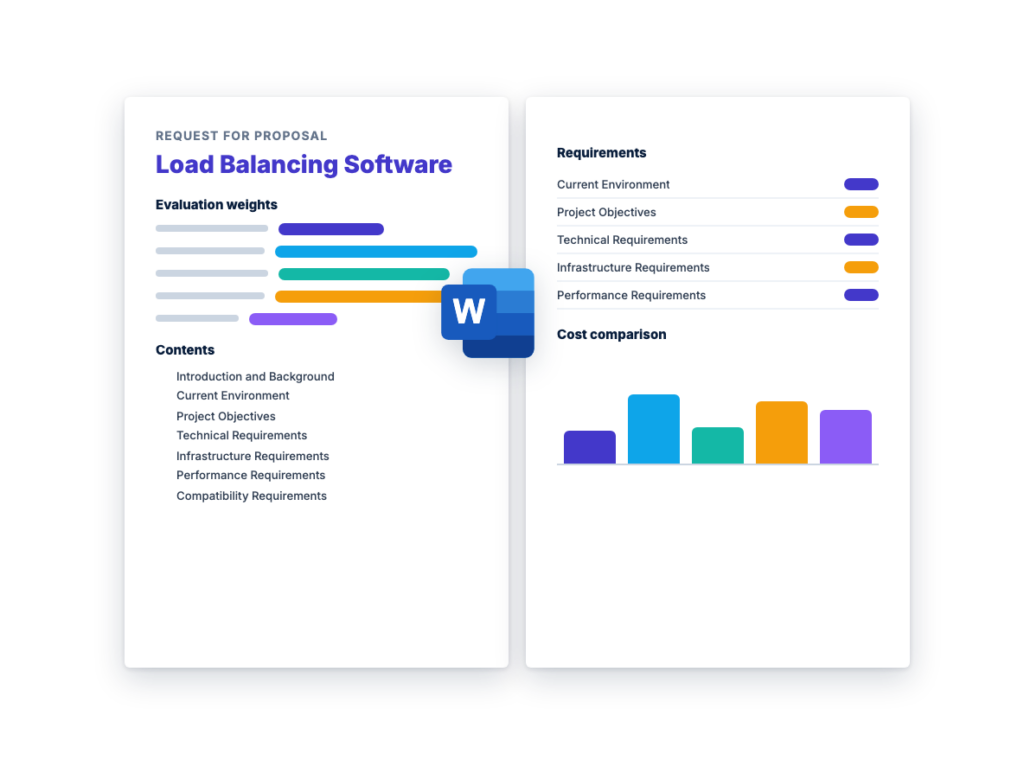
Request for Proposal: Load Balancing Software Solution
Table of Contents
- Introduction and Background
- Technical Requirements
- Functional Requirements
- AI-Driven Enhancements
- Additional Requirements
- Evaluation Criteria
- Submission Guidelines
- Timeline and Contact Information
1. Introduction and Background
[Company Name] is seeking proposals for a comprehensive load balancing software solution to optimize network traffic distribution, enhance application performance, and ensure high availability of our services. This RFP outlines our requirements for a robust system that will protect our network endpoints, including desktops, laptops, mobile devices, and servers, from various security threats.
Current Environment
- [Describe your current infrastructure]
- [List current challenges]
- [Specify number of endpoints]
Project Objectives
- Implement a robust load balancing solution
- Enhance application performance and availability
- Optimize resource utilization
- Improve security and monitoring capabilities
- Enable scalability for future growth
2. Technical Requirements
Infrastructure Requirements
- Support for virtual and physical environments
- Compatibility with existing network infrastructure
- Integration with current monitoring systems
- Support for IPv4 and IPv6
- High availability configuration support
Performance Requirements
- Maximum latency: [Specify] milliseconds
- Minimum throughput: [Specify] Gbps
- Concurrent connection capacity: [Specify] connections
- SSL/TLS transaction rate: [Specify] TPS
- Response time under peak load: [Specify] milliseconds
Compatibility Requirements
- Support for major hypervisors
- Cloud platform compatibility
- Container orchestration support
- Integration with common monitoring tools
- Support for standard protocols
Security Requirements
- SSL/TLS support with modern cipher suites
- DDoS protection capabilities
- Access control and authentication
- Audit logging and reporting
- Compliance with security standards
Scalability Requirements
- Support for horizontal and vertical scaling
- Automatic scaling capabilities
- No single point of failure
- Geographic distribution support
- Load balancing across multiple data centers
3. Functional Requirements
3.1 Traffic Distribution
Tip: Traffic distribution is the foundation of load balancing architecture and requires careful consideration of multiple aspects. A robust traffic distribution system should handle both anticipated and unexpected traffic patterns while maintaining optimal performance. Consider the impact on application behavior, network latency, and how the system handles traffic spikes or failures.
| Requirement |
Sub-Requirement |
Y/N |
Notes |
| Traffic Distribution |
Support for Layer 4 (TCP/UDP) traffic management |
|
|
|
Support for Layer 7 (application-layer) traffic management |
|
|
|
Round-robin distribution algorithm implementation |
|
|
|
Least connections algorithm support |
|
|
|
IP hash capability |
|
|
|
Custom algorithm configuration options |
|
|
|
Real-time traffic distribution monitoring |
|
|
|
Traffic distribution reporting capabilities |
|
|
|
Geographic traffic routing capabilities |
|
|
|
Protocol-specific optimization |
|
|
3.2 Server Health Monitoring
Tip: Server health monitoring forms the critical backbone of reliable load balancing operations. An effective monitoring system should combine multiple health check methods, provide early warning of potential issues, and enable automatic remediation actions. Consider both the depth and frequency of health checks, along with their impact on system performance and resource utilization.
| Requirement |
Sub-Requirement |
Y/N |
Notes |
| Health Monitoring |
Heartbeat check implementation |
|
|
|
Application-layer health probes |
|
|
|
Automatic failure detection |
|
|
|
Configurable health check intervals |
|
|
|
Custom health check parameters |
|
|
|
Health status reporting and alerts |
|
|
|
Historical health data retention |
|
|
|
Automated server removal/addition based on health |
|
|
|
Multi-metric health evaluation |
|
|
|
Real-time health status dashboard |
|
|
3.3 Scalability
Tip: Scalability capabilities must address both planned growth and unexpected traffic surges while maintaining consistent performance. A comprehensive scalability solution should provide automatic resource adjustment, seamless capacity expansion, and intelligent distribution of workloads across available resources. Consider both vertical and horizontal scaling needs, along with the impact on existing connections and application state management.
| Requirement |
Sub-Requirement |
Y/N |
Notes |
| Scalability Features |
Dynamic scaling capability |
|
|
|
Zero-downtime server addition |
|
|
|
Zero-downtime server removal |
|
|
|
Auto-scaling based on traffic patterns |
|
|
|
Horizontal scaling support |
|
|
|
Vertical scaling support |
|
|
|
Resource utilization monitoring |
|
|
|
Scaling threshold configuration |
|
|
|
Performance impact analysis |
|
|
|
Capacity planning tools |
|
|
3.4 Load Balancing Algorithms
Tip: Load balancing algorithms form the core intelligence of traffic distribution and must be both sophisticated and adaptable. The implementation should support multiple algorithms that can be selected and customized based on specific application requirements, traffic patterns, and performance goals. Consider the need for both standard algorithms and the ability to create custom solutions for unique scenarios.
| Requirement |
Sub-Requirement |
Y/N |
Notes |
| Algorithm Support |
Multiple algorithm implementation |
|
|
|
Custom algorithm creation capability |
|
|
|
Algorithm fine-tuning options |
|
|
|
Real-time algorithm adjustment |
|
|
|
Performance monitoring per algorithm |
|
|
|
Algorithm switching capabilities |
|
|
|
Load pattern analysis |
|
|
|
Algorithm effectiveness reporting |
|
|
|
Custom metric integration |
|
|
|
A/B testing support |
|
|
3.5 SSL/TLS Offloading
Tip: SSL/TLS offloading is crucial for optimizing performance while maintaining security. The implementation should handle complex certificate management, support multiple security protocols, and provide efficient encryption/decryption processes. Consider the balance between security requirements and performance impact, along with the need for hardware acceleration and key management capabilities.
| Requirement |
Sub-Requirement |
Y/N |
Notes |
| SSL/TLS Management |
SSL/TLS encryption handling |
|
|
|
SSL/TLS decryption handling |
|
|
|
Certificate management system |
|
|
|
Multiple SSL/TLS version support |
|
|
|
Hardware acceleration integration |
|
|
|
Certificate rotation automation |
|
|
|
Performance optimization |
|
|
|
Security compliance reporting |
|
|
|
Key management capabilities |
|
|
|
SSL/TLS session management |
|
|
3.6 Session Persistence
Tip: Session persistence mechanisms must ensure consistent user experience while maintaining optimal load distribution. The implementation should support multiple persistence methods, handle session failures gracefully, and provide flexible configuration options. Consider the impact on application state management, database consistency, and the ability to maintain persistence during scaling or failover events.
| Requirement |
Sub-Requirement |
Y/N |
Notes |
| Session Management |
Cookie-based persistence |
|
|
|
IP-based persistence |
|
|
|
URL-based persistence |
|
|
|
Custom persistence rules |
|
|
|
Session timeout configuration |
|
|
|
Cross-datacenter persistence |
|
|
|
Session monitoring capabilities |
|
|
|
Backup session handling |
|
|
|
Session synchronization |
|
|
|
Failover persistence maintenance |
|
|
3.7 Content-Based Routing
Tip: Content-based routing must provide intelligent traffic distribution based on detailed request analysis. The system should support deep packet inspection, handle multiple content types, and offer flexible rule configuration. Consider the performance impact of content inspection, the need for custom rule creation, and the ability to handle encrypted traffic while maintaining routing efficiency.
| Requirement |
Sub-Requirement |
Y/N |
Notes |
| Content Routing |
Packet content analysis |
|
|
|
HTTP header inspection |
|
|
|
URL pattern matching |
|
|
|
Custom routing rules |
|
|
|
Application data routing |
|
|
|
Real-time rule updates |
|
|
|
Route optimization |
|
|
|
Performance monitoring |
|
|
|
Content type recognition |
|
|
|
Rule conflict resolution |
|
|
3.8 High Availability and Failover
Tip: High availability and failover mechanisms must ensure continuous service operation under various failure scenarios. The system should provide automatic failure detection, seamless failover execution, and rapid service recovery. Consider both hardware and software failure scenarios, geographic redundancy requirements, and the need for maintaining session persistence during failover events.
| Requirement |
Sub-Requirement |
Y/N |
Notes |
| HA Features |
Failover mechanism implementation |
|
|
|
Geo-redundancy support |
|
|
|
Global server load balancing |
|
|
|
Active-active configuration |
|
|
|
Active-passive configuration |
|
|
|
Automatic failover triggers |
|
|
|
Failover testing capabilities |
|
|
|
Recovery time monitoring |
|
|
|
Configuration synchronization |
|
|
|
Health check integration |
|
|
3.9 Security Features
Tip: Security features must provide comprehensive protection against various threats while maintaining system performance. The implementation should include multiple layers of security, from basic access control to advanced threat prevention. Consider integration with existing security infrastructure, compliance requirements, real-time threat response capabilities, and the need for detailed security event logging and analysis.
| Requirement |
Sub-Requirement |
Y/N |
Notes |
| Security Capabilities |
DDoS protection integration |
|
|
|
WAF integration |
|
|
|
Access control implementation |
|
|
|
Security policy management |
|
|
|
Threat detection capabilities |
|
|
|
Security event logging |
|
|
|
Real-time threat response |
|
|
|
Security compliance reporting |
|
|
|
SSL/TLS security features |
|
|
|
Zero-day threat protection |
|
|
3.10 Real-Time Analytics and Reporting
Tip: Real-time analytics and reporting capabilities must provide comprehensive visibility into system performance and behavior. The system should offer detailed metrics collection, customizable dashboards, and automated reporting features. Consider the need for historical data analysis, trend identification, capacity planning capabilities, and the ability to generate compliance-related reports.
| Requirement |
Sub-Requirement |
Y/N |
Notes |
| Analytics Features |
Traffic pattern analysis |
|
|
|
Server health monitoring |
|
|
|
Performance metrics tracking |
|
|
|
Custom dashboard creation |
|
|
|
Report generation tools |
|
|
|
Historical data analysis |
|
|
|
Alert configuration |
|
|
|
Data export capabilities |
|
|
|
Trend analysis tools |
|
|
|
Capacity planning features |
|
|
3.11 API and Integration Support
Tip: API and integration capabilities must enable seamless interaction with existing systems while supporting automation requirements. The implementation should provide comprehensive API documentation, support multiple integration methods, and enable custom automation workflows. Consider security requirements for API access, rate limiting needs, and the ability to maintain API compatibility across system updates.
| Requirement |
Sub-Requirement |
Y/N |
Notes |
| API Support |
RESTful API availability |
|
|
|
API documentation |
|
|
|
Custom integration capability |
|
|
|
Authentication mechanisms |
|
|
|
Rate limiting features |
|
|
|
API version control |
|
|
|
Integration monitoring |
|
|
|
Error handling capabilities |
|
|
|
Webhook support |
|
|
|
API analytics |
|
|
3.12 Multi-Protocol Support
Tip: Multi-protocol support must ensure compatibility with a wide range of applications and services while maintaining optimal performance. The implementation should handle various network protocols efficiently, provide protocol-specific optimizations, and support custom protocol requirements. Consider the need for protocol conversion, security implications of different protocols, and performance monitoring requirements.
| Requirement |
Sub-Requirement |
Y/N |
Notes |
| Protocol Support |
HTTP/HTTPS support |
|
|
|
TCP/UDP handling |
|
|
|
WebSocket support |
|
|
|
SMTP capability |
|
|
|
FTP handling |
|
|
|
Custom protocol support |
|
|
|
Protocol conversion |
|
|
|
Protocol performance monitoring |
|
|
|
Protocol-specific optimization |
|
|
|
Security protocol integration |
|
|
3.13 Cloud and Container Integration
Tip: Cloud and container integration capabilities must provide seamless deployment and management across different environments. The implementation should support multiple cloud providers, container orchestration platforms, and hybrid deployments. Consider automatic scaling requirements, container health monitoring, cross-platform compatibility, and the need for consistent management across different deployment models.
| Requirement |
Sub-Requirement |
Y/N |
Notes |
| Cloud Integration |
Cloud provider support |
|
|
|
Kubernetes integration |
|
|
|
Container orchestration |
|
|
|
Microservices support |
|
|
|
Auto-scaling capability |
|
|
|
Cloud-native features |
|
|
|
Multi-cloud management |
|
|
|
Container health monitoring |
|
|
|
Cloud resource optimization |
|
|
|
Hybrid cloud support |
|
|
4. AI-Driven Enhancements
4.1 Semantic Caching and Routing
Tip: Semantic caching and routing capabilities must leverage AI to optimize request handling and cache utilization. The implementation should identify and categorize similar requests, maintain cache efficiency, and provide intelligent routing decisions. Consider the balance between cache hit rates and freshness, the need for custom semantic rules, and the impact on system resources.
| Requirement |
Sub-Requirement |
Y/N |
Notes |
| Semantic Capabilities |
Implementation of semantic caching |
|
|
|
Similar request pattern recognition |
|
|
|
LLM/model pair routing capability |
|
|
|
Cache optimization algorithms |
|
|
|
Pattern-based routing rules |
|
|
|
Cache hit/miss analytics |
|
|
|
Custom semantic rules configuration |
|
|
|
Performance impact monitoring |
|
|
|
Machine learning model updates |
|
|
|
Semantic analysis reporting |
|
|
4.2 AI-Powered Load Balancing
Tip: AI-powered load balancing must utilize advanced machine learning algorithms to optimize resource allocation and traffic distribution. The system should continuously learn from traffic patterns, predict resource needs, and automatically adjust distribution strategies. Consider the need for real-time adaptation, historical pattern analysis, and the ability to handle complex multi-variable optimization scenarios.
| Requirement |
Sub-Requirement |
Y/N |
Notes |
| AI Load Balancing |
Machine learning algorithm implementation |
|
|
|
Predictive analysis capabilities |
|
|
|
Dynamic resource allocation |
|
|
|
Real-time workload optimization |
|
|
|
Historical pattern analysis |
|
|
|
Performance prediction models |
|
|
|
Algorithm training capabilities |
|
|
|
Custom optimization rules |
|
|
|
Multi-variable analysis |
|
|
|
Model accuracy monitoring |
|
|
4.3 Adaptive Power Management
Tip: Adaptive power management must intelligently balance performance requirements with energy efficiency using AI-driven optimization. The system should analyze usage patterns, predict resource needs, and automatically adjust power consumption. Consider both short-term power optimization and long-term sustainability goals, along with the impact on system performance and reliability.
| Requirement |
Sub-Requirement |
Y/N |
Notes |
| Power Management |
AI-driven power optimization |
|
|
|
Low-traffic period detection |
|
|
|
Automated resource scaling |
|
|
|
Power usage monitoring |
|
|
|
Energy efficiency metrics |
|
|
|
Green computing features |
|
|
|
Power threshold management |
|
|
|
Efficiency reporting |
|
|
|
Predictive power scaling |
|
|
|
Energy cost optimization |
|
|
4.4 Intelligent Traffic Analysis
Tip: Intelligent traffic analysis must leverage AI capabilities to provide deep insights into traffic patterns and system behavior. The implementation should identify trends, predict traffic patterns, and enable proactive resource allocation. Consider the need for real-time analysis, historical trend correlation, and the ability to generate actionable insights from complex traffic data.
| Requirement |
Sub-Requirement |
Y/N |
Notes |
| Traffic Analysis |
AI pattern recognition |
|
|
|
Proactive resource allocation |
|
|
|
Traffic trend prediction |
|
|
|
Usage pattern analysis |
|
|
|
Capacity planning tools |
|
|
|
Performance optimization |
|
|
|
Anomaly detection |
|
|
|
Traffic reporting |
|
|
|
Predictive analytics |
|
|
|
Real-time traffic optimization |
|
|
4.5 Enhanced Security Features
Tip: AI-enhanced security features must provide advanced threat detection and prevention capabilities while maintaining system performance. The implementation should utilize machine learning for identifying threats, analyzing behavior patterns, and automating responses. Consider the balance between security effectiveness and false positives, the need for continuous model updating, and integration with existing security infrastructure.
| Requirement |
Sub-Requirement |
Y/N |
Notes |
| AI Security |
Machine learning-based DDoS protection |
|
|
|
Behavioral anomaly detection |
|
|
|
Automated threat response |
|
|
|
Security pattern recognition |
|
|
|
Predictive threat analysis |
|
|
|
Real-time security monitoring |
|
|
|
Security event correlation |
|
|
|
Threat intelligence integration |
|
|
|
AI model adaptation |
|
|
|
Zero-day threat detection |
|
|
4.6 Self-Service Load Balancing
Tip: Self-service load balancing capabilities must provide intuitive configuration options while maintaining system stability. The implementation should use AI to guide users through setup processes, suggest optimal configurations, and prevent misconfigurations. Consider the balance between automation and control, the need for role-based access, and the ability to validate configuration changes before implementation.
| Requirement |
Sub-Requirement |
Y/N |
Notes |
| Self-Service Features |
AI-assisted configuration |
|
|
|
Automated setup recommendations |
|
|
|
Intelligent policy suggestions |
|
|
|
User behavior analysis |
|
|
|
Self-optimizing configurations |
|
|
|
Guided troubleshooting |
|
|
|
Custom policy creation |
|
|
|
Usage analytics |
|
|
|
Configuration validation |
|
|
|
Role-based access control |
|
|
4.7 Automated Conversion and Migration
Tip: Automated conversion and migration capabilities must ensure reliable transformation of existing configurations while minimizing disruption. The AI system should analyze current configurations, suggest optimizations, and validate changes. Consider the complexity of existing setups, the need for rollback capabilities, and the importance of maintaining security during migration.
| Requirement |
Sub-Requirement |
Y/N |
Notes |
| Migration Tools |
Legacy config conversion |
|
|
|
Automated migration paths |
|
|
|
Configuration optimization |
|
|
|
Risk analysis features |
|
|
|
Compatibility checking |
|
|
|
Automated testing |
|
|
|
Rollback capabilities |
|
|
|
Migration reporting |
|
|
|
Performance validation |
|
|
|
Security maintenance |
|
|
4.8 Global Load Balancing for AI/ML Workloads
Tip: Global load balancing for AI/ML workloads requires specialized optimization for distributed processing environments. The implementation must handle complex data center fabric requirements, optimize model training distribution, and ensure efficient inference processing. Consider specific requirements for GPU clusters, distributed training patterns, and the need for deterministic performance across global infrastructure.
| Requirement |
Sub-Requirement |
Y/N |
Notes |
| AI/ML Load Balancing |
End-to-end path quality assessment for AI fabrics |
|
|
|
Dynamic load balancing (DLB) for AI workloads |
|
|
|
Global load balancing (GLB) for AI data centers |
|
|
|
AI workload-specific routing optimization |
|
|
|
Training performance optimization |
|
|
|
Inference workload optimization |
|
|
|
Resource allocation for AI clusters |
|
|
|
GPU cluster load balancing |
|
|
|
Model synchronization support |
|
|
|
Training data distribution optimization |
|
|
4.9 AI-Driven Congestion Control
Tip: AI-driven congestion control must provide sophisticated network fabric management for complex AI workloads. The system should implement predictive congestion avoidance, optimize traffic flow patterns, and maintain quality of service across varied workloads. Consider the requirements for different types of AI traffic, the impact of training vs. inference workflows, and the need for automated fabric configuration.
| Requirement |
Sub-Requirement |
Y/N |
Notes |
| Congestion Control |
AI-powered fabric autotuning |
|
|
|
Network fabric optimization for AI workloads |
|
|
|
Predictive congestion management |
|
|
|
AI-specific traffic flow optimization |
|
|
|
ML-based QoS management |
|
|
|
Dynamic bandwidth allocation |
|
|
|
Real-time fabric performance metrics |
|
|
|
Training data flow prioritization |
|
|
|
Inference request path optimization |
|
|
|
Automated fabric configuration |
|
|
4.10 Enhanced Visibility and Observability
Tip: Enhanced visibility and observability features must provide comprehensive insights into AI workload performance and system behavior. The implementation should integrate advanced telemetry data, correlate multiple data sources, and provide actionable insights. Consider the requirements for specialized hardware monitoring, the need for cross-system correlation, and the ability to identify performance bottlenecks.
| Requirement |
Sub-Requirement |
Y/N |
Notes |
| Visibility Tools |
AI server SmartNIC telemetry integration |
|
|
|
Network switch data correlation |
|
|
|
AI workload performance analytics |
|
|
|
SmartNIC-based predictive maintenance |
|
|
|
System health forecasting |
|
|
|
ML workload resource utilization tracking |
|
|
|
Custom AI metric creation |
|
|
|
AI fabric visualization tools |
|
|
|
Cross-fabric visibility |
|
|
|
Performance bottleneck detection |
|
|
5. Additional Requirements
5.1 Deployment Options
- Hardware deployment support
- Software deployment options
- Virtual deployment capabilities
- Cloud-based deployment
- Hybrid deployment models
5.2 Performance and Capacity
- Specified traffic volume handling
- Concurrent connection support
- Low latency processing
- Performance monitoring and optimization
5.3 Compliance and Certifications
- GDPR compliance
- HIPAA compliance requirements
- PCI DSS compliance
- SOC 2 certification
- ISO 27001 compliance
- Regular compliance auditing
- Automated compliance reporting
- Data privacy controls
- Regulatory update management
- Compliance documentation maintenance
5.4 Disaster Recovery
- Built-in disaster recovery features
- Integration with existing DR solutions
- Automated failover procedures
- Regular backup systems
- Recovery time objectives (RTO)
- Recovery point objectives (RPO)
- DR testing capabilities
- Cross-region recovery
- Data synchronization
- DR documentation and procedures
5.5 Cost-Effectiveness
- Transparent pricing model
- Scalability pricing options
- ROI analysis tools
- Total cost of ownership evaluation
- Usage-based pricing options
- Volume discounts
- License management
- Cost optimization features
- Resource utilization tracking
- Budget management tools
5.6 Support and Maintenance
- 24/7 technical support
- Multiple support channels
- Guaranteed response times
- Regular maintenance schedules
- Update and patch management
- Knowledge base access
- Training resources
- Escalation procedures
- Support ticket tracking
- Service level agreements
6. Evaluation Criteria
Proposals will be evaluated based on the following weighted criteria:
6.1 Technical Merit (40%)
- Feature completeness against requirements
- Performance benchmarks
- Scalability capabilities
- Security features
- Integration capabilities
- AI/ML functionality
6.2 Implementation and Support (25%)
- Implementation methodology
- Project timeline
- Training approach
- Support services
- Documentation quality
- Update procedures
6.3 Cost Structure (20%)
- Initial implementation costs
- Ongoing operational costs
- Training costs
- Support costs
- Upgrade costs
- Total cost of ownership
6.4 Vendor Qualifications (15%)
- Company stability
- Technical expertise
- Industry experience
- Customer references
- Innovation capability
- Market presence
7. Submission Guidelines
7.1 Proposal Format
Proposals must include:
- Executive Summary
- Company Background
- Technical Solution Details
- Implementation Approach
- Support and Maintenance Plan
- Pricing Structure
- Client References
- Project Timeline
- Training Plan
- Sample Documentation
Submission Requirements
- Submit proposals electronically to [email]
- Include all required documentation
- Follow provided format guidelines
- Meet submission deadline
- Include signed certifications
- Provide required number of copies
8. Timeline
- RFP Release Date: [Date]
- Questions Deadline: [Date]
- Response to Questions: [Date]
- Proposal Due Date: [Date]
- Vendor Presentations: [Date Range]
- Vendor Selection: [Date]
- Project Kickoff: [Date]
9. Contact Information
Primary Contact
- Name: [Name]
- Title: [Title]
- Email: [Email]
- Phone: [Phone]
Technical Contact
- Name: [Name]
- Title: [Title]
- Email: [Email]
- Phone: [Phone]
Download Template